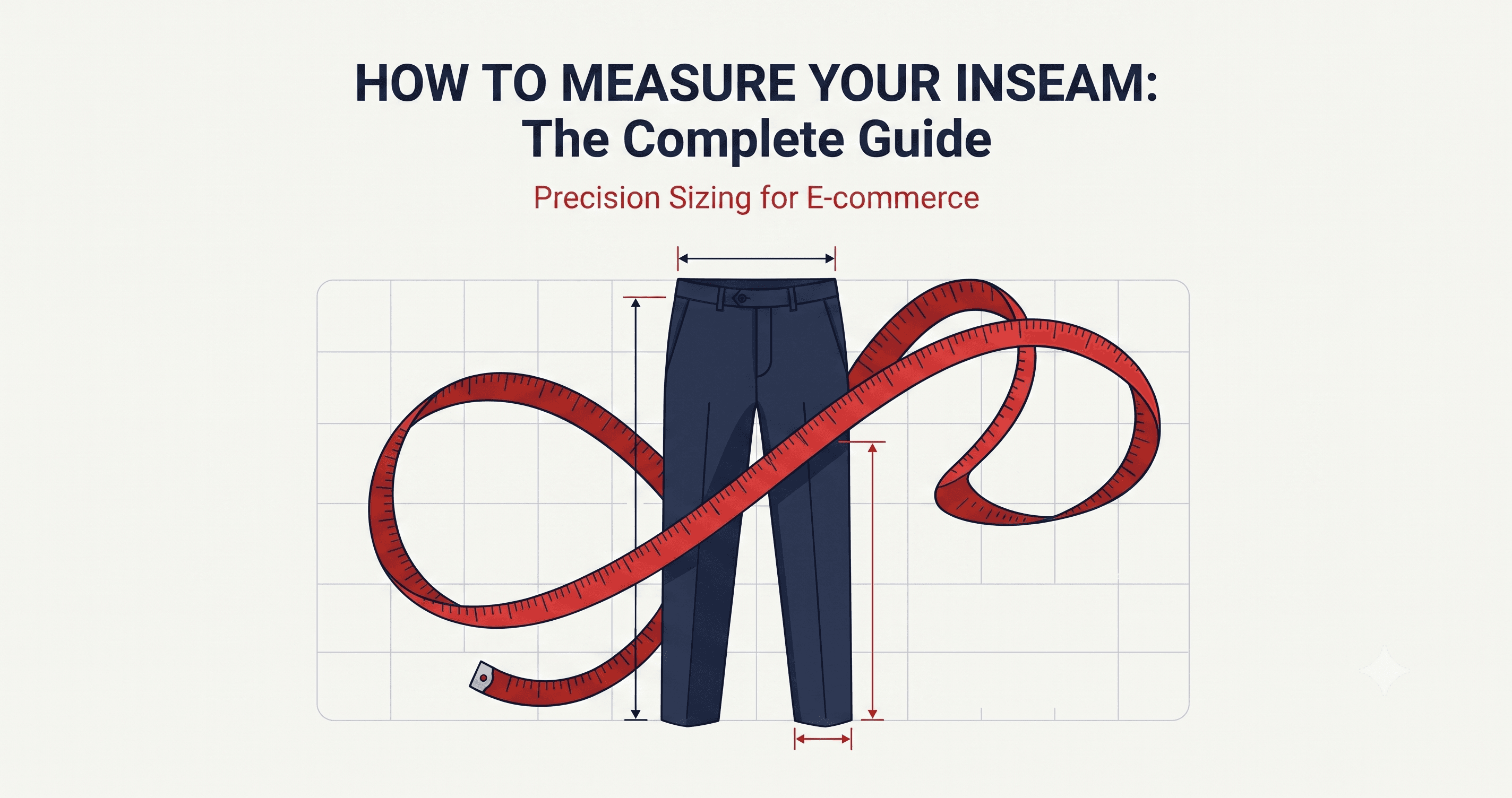
How to Measure Your Inseam: The Complete Guide
Learn how to measure your inseam correctly in under 2 minutes — two easy methods, a height-to-inseam chart, and answers to the questions people actually ask.
August 30, 2026
Getting your inseam wrong is the single most common reason pants end up back in a return box. Too short and they look like you outgrew them. Too long and you're stepping on the hem by lunchtime. The good news: measuring it correctly takes under two minutes and needs nothing more than a tape measure — or a pair of pants that already fit.
This guide covers both ways to do it, a height-based reference chart if you don't have a measuring tape handy, and answers to the questions people actually search for when they're stuck mid-measurement.
What Is an Inseam?
Your inseam is the distance from the top of your inner thigh (where the leg meets the crotch) down to your ankle bone — or, on a pair of pants, the length of the inner leg seam from the crotch to the hem. It's the single most important number for getting pant length right, more useful than your height alone because two people who are both 5'10" can have noticeably different leg lengths.
Inseam is usually given in inches (e.g., a "32 inseam") and is one half of the two-number sizing system used on most men's pants — the other being the waist measurement (like "34x32").
Prefer to watch? Here’s the 10-second version
Measure a Pair of Pants That Already Fit
If you have pants whose length you're happy with, this is the fastest and most accurate method — you're measuring the actual result, not trying to estimate it on a moving target (yourself).
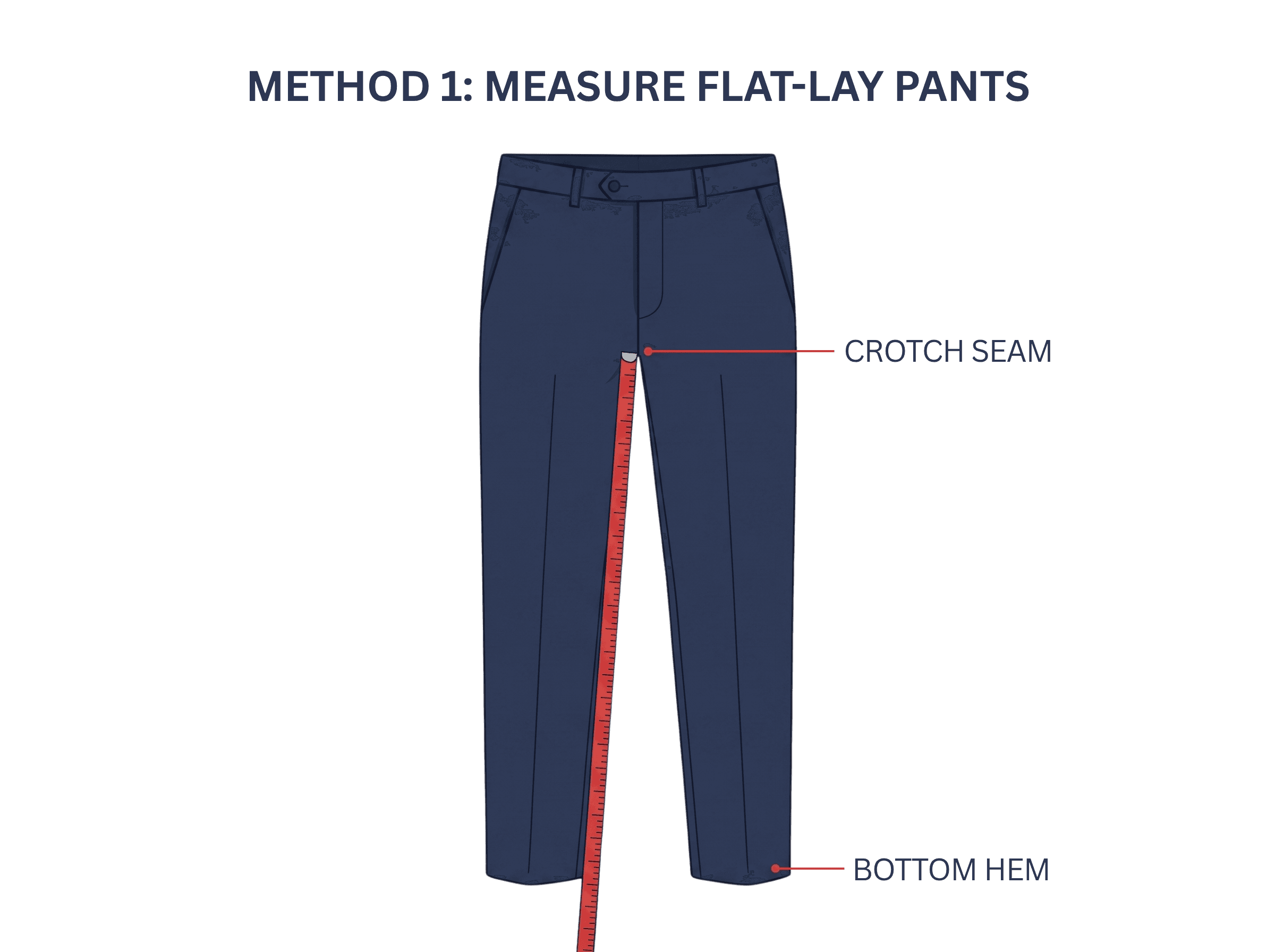
- Lay the pants flat on a table or the floor, front side up, and smooth out any wrinkles or folds.
- Find the crotch seam — the point where the front and back seams of the leg meet in the middle.
- Place your tape measure at that seam and run it straight down the inside of the leg to the bottom hem.
- Record the number in inches. That's your inseam.
Repeat on the other leg if you want to double-check — a small difference (under half an inch) is normal and not worth worrying about.
Measure Your Body Directly
Use this method if you don't have a well-fitting pair on hand, or you want a true body measurement rather than one based on an existing garment (useful if your current pants are already too long or short).
- Wear thin, form-fitting clothing or underwear — bulky fabric will throw the measurement off.
- Stand up straight and barefoot, feet slightly apart. Having someone help you is easier than doing it solo.
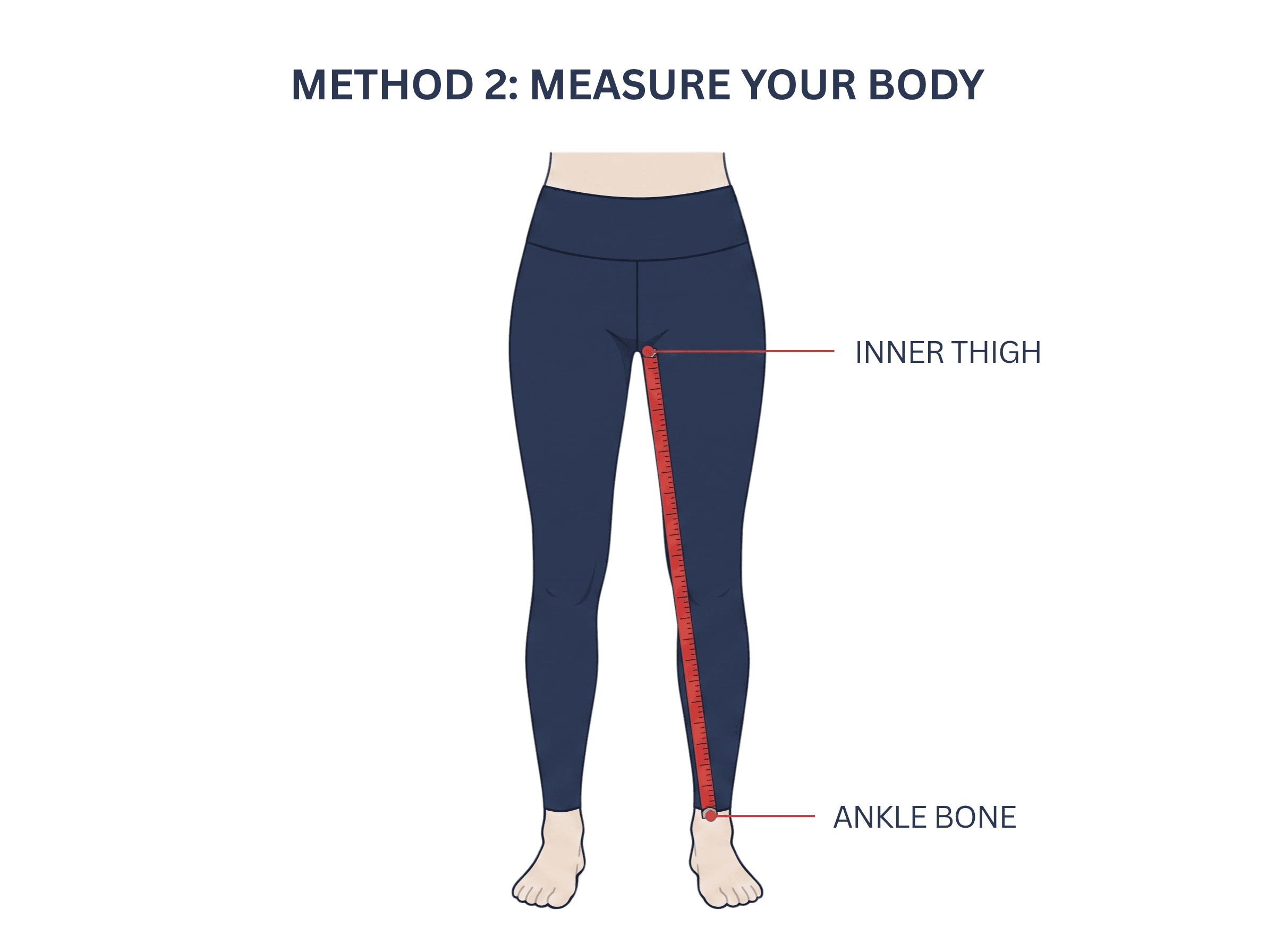
- Place the tape at the top of your inner thigh, right where your leg meets your body.
- Run the tape straight down the inside of your leg to your ankle bone, or to wherever you want the pants to end (some people prefer a slightly shorter break at the shoe).
- Record the measurement in inches.
A quick trick if you're measuring alone: stand against a wall, place a book snugly between your legs (like you're sitting on it), and mark where the top edge sits — then measure from that mark to the floor.
Inseam by Height
If you don't have a tape measure nearby, here's a general estimate based on average proportions. This is a starting point, not a substitute for measuring — leg-to-torso ratio varies a lot between individuals.
Find your inseam by height
Hover a row to see the inseam range
If your measured inseam falls noticeably outside the range for your height, trust the tape measure — it's specific to you, while the chart is an average.
Common Inseam Lengths and What They Mean
- 28"–30" inseam — considered short/petite in most standard sizing, common for heights under 5'6"
- 32" inseam — the most common "regular" length stocked by most retailers
- 34" inseam — tall/long, typically for heights 6'0" and above
- 36"+ inseam — extra-long, usually a separate "tall" size category
Retailers vary in how they label these, which is exactly why sizing charts differ so much between apparel brands.
“Inseam is where a lot of otherwise-confident online shopping breaks down.”
Waist size is easy to know off the top of your head; inseam requires an actual measurement most people have never taken, and every brand cuts length slightly differently — a "32" at one retailer isn't guaranteed to match another. That mismatch is one of the leading reasons apparel returns happen at all: the item looks right in the photo, but the length is wrong the moment it arrives. The fix isn't complicated — it's giving shoppers a clear, brand-specific size chart at the point of purchase instead of expecting them to guess based on a generic number. Stores that show buyers exactly how their sizing maps to real measurements can reduce returns.
Frequently Asked Questions
?What height is a 32-inch inseam?
A 32" inseam is typical for people between about 5'7" and 5'9", though it varies with leg-to-torso proportions — some 5'10" people wear a 32", and some 5'6" people do too.
?What is my inseam if I'm 5'2"?
Most people around 5'2" fall in the 27"–29" inseam range, but measuring directly is always more reliable than estimating from height alone.
?Is a 27-inch inseam long or short?
A 27" inseam is on the shorter end, typically suited to heights under 5'3" or for a cropped/ankle-length fit intentionally.
?What does "32 inseam" mean on a pants label?
It means the inner leg seam — from crotch to hem — measures 32 inches on that specific pair. It's usually paired with a waist number, like "34x32" (34" waist, 32" inseam).
Get It Right the First Time
Once you know your inseam, the real challenge is translating it correctly for whatever you're buying — every brand's chart is a little different. Storely Size shows shoppers exactly how their measurements map to each product's real sizing, right on the product page, so there's no guesswork and fewer sizing-related returns.
More sizing guides
More cluster guides — kids’ sizing, shoe-size conversion, and more — land here as they’re published.